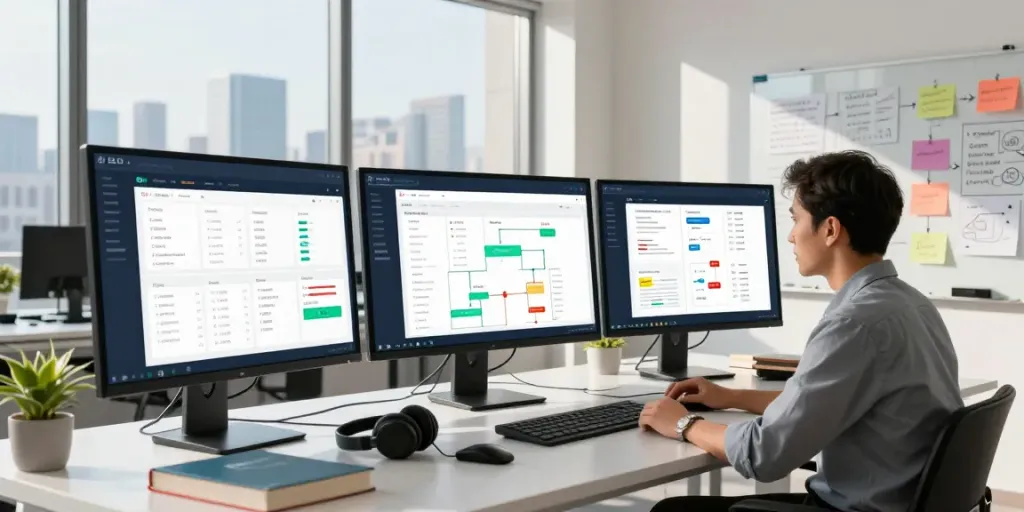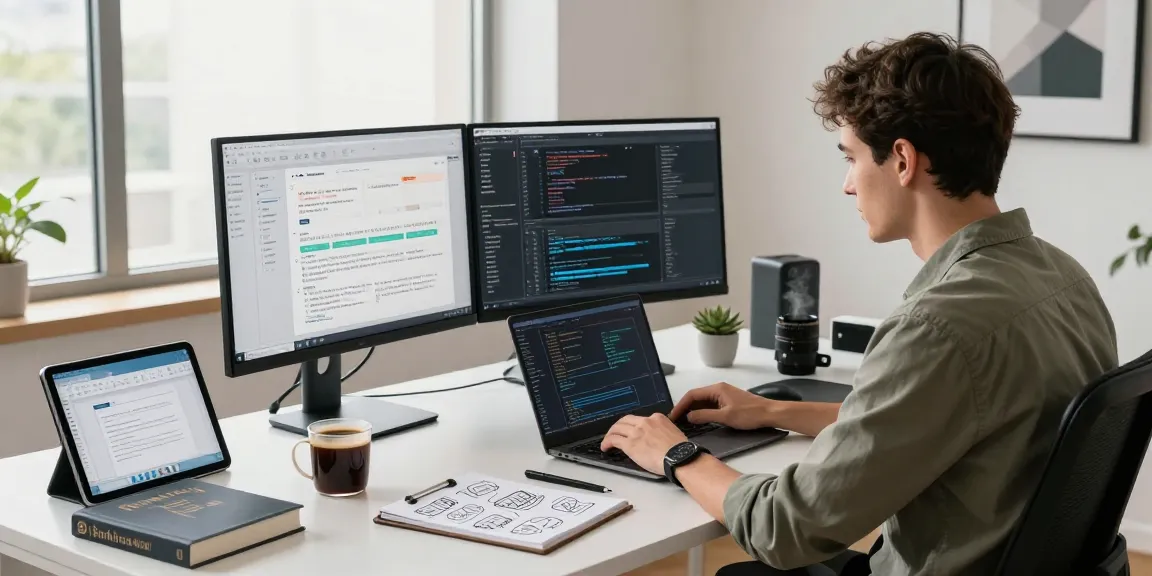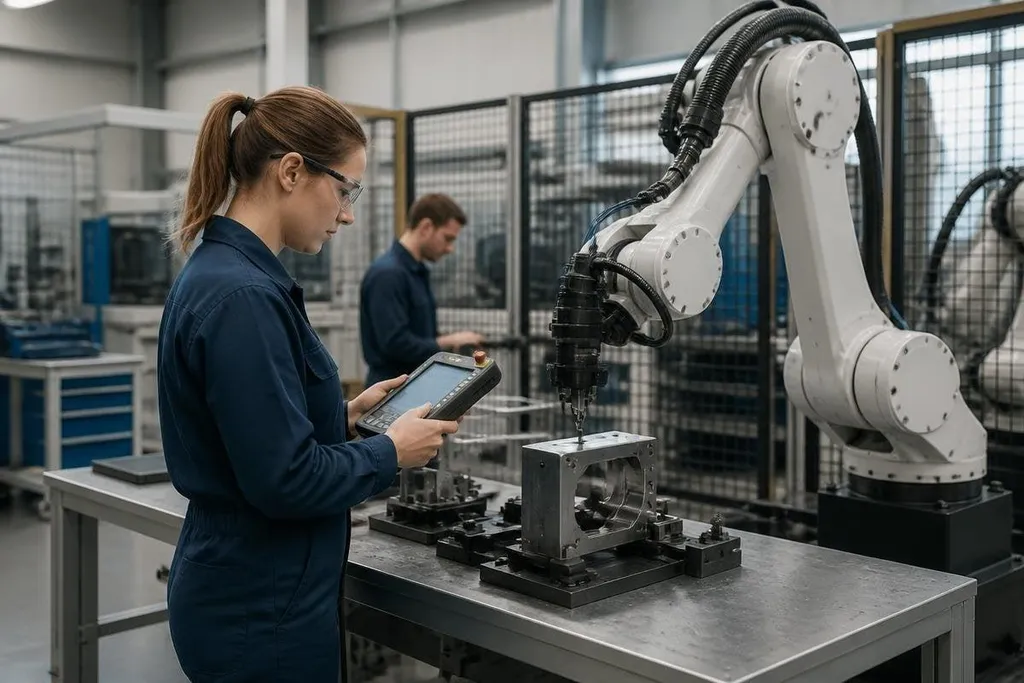
On a work floor, a robot changes the job around it. The worker still needs trade knowledge, but they may also need to set task limits, read sensor data, and fix a failed motion.
This shift matters to anyone planning training for operators, technicians, or engineers. The useful question is no longer only how to run a robot. It is how to work safely when software, sensors, and people share the same task.
- Robot operators need to read status data, not only press start.
- Technicians need skills in sensors, motors, software, and safe recovery.
- Training should use the same tools and failure cases found on the work floor.
The job moves closer to the robot
Many robot jobs begin with a task that once depended on a person’s hands and eyes. A worker may now load parts, check a camera feed, approve a path, or remove an object after a stop.
That changes the skill mix. Manual skill still matters because parts, tools, and fixtures rarely sit in perfect positions. The worker also needs to understand what the robot can sense, what it cannot sense, and which action may make the fault worse.
For example, a robot arm may stop after its force sensor detects resistance. The operator needs to identify the cause before clearing the stop. A loose part, a blocked path, and a damaged gripper can produce similar symptoms but need different fixes.
The training target is practical judgment. Workers need a safe way to check the work area, read the robot’s message, and choose the next permitted action.
New skills sit between trades
Robotics work crosses old job lines. An operator may need to understand a short program. An electrician may need to read motor or encoder data. A maintenance technician may need to adjust a camera or check a network connection.
The goal isn’t to turn every worker into a software engineer. It is to give each person enough knowledge to spot the source of a problem and pass useful details to the next person.
That means training can cover a small set of shared terms and actions:
- End effector: the tool on the robot arm, such as a gripper or welder.
- Payload: the mass the robot can carry at a stated reach and speed.
- Teleoperation: control of the robot by a person from another position.
- Safety zone: the marked area where access and robot motion follow set rules.
These terms connect the work of operators, technicians, and engineers. They also give teams a common way to describe a fault without relying on guesswork.
Practice should include failure
A training robot should not spend every session completing a clean task. People need practice with stops, misplaced parts, blocked sensors, and changes to the work area.
Simulation can help with early practice. It lets a trainee test a path or change a task without moving a physical arm. The physical robot still matters because timing, sound, cable movement, and the feel of a tool can differ from a screen.
Teleoperation adds another useful step. A worker can guide a robot through a task while learning how control commands affect speed, force, and position. The instructor can then review the recorded sensor data and point out where the motion became unsafe.
A training plan has to match the robot and control system a worker will meet on the job. Dated reports on Robot 24 can help instructors compare practice tasks with the machine, software, and work setting used in production. That comparison shows where a lesson ends and live work begins.
The weak point is often the handoff between training and production.
A lesson built around one robot model may not prepare someone for a different gripper, control screen, or safety setup. Training records should name the robot, software version, tool, task, and fault cases used in practice.
A practical training check
Use this checklist before approving a course for a new robot or work cell:
- Name the task: Write down the exact job the worker must perform and the safe end state.
- List the limits: Record payload, reach, speed, access rules, and the actions the operator may take after a stop.
- Add fault practice: Include sensor blockage, misplaced parts, loss of communication, and one tool or fixture problem when those cases apply.
- Check the handoff: Define what information an operator sends to maintenance or engineering after a failed cycle.
- Test the record: Confirm that the trainee can read the robot status, describe the fault, and log the action taken.
I’d put fault recovery near the start of the course, not at the end. A robot that works perfectly during training teaches a clean procedure, while production asks people to handle the moments when that procedure breaks.
The next useful measure is simple: record which faults workers can identify without help, then update the lessons around the gaps. That turns robot training into a working skill plan rather than a one-time equipment briefing.